The cause of tight calf muscles
Our calves are engaged in every step we take, and if you supplement yoga practice with running, hiking, cycling, or weight training, muscle fatigue can quickly set in. Reduced ankle mobility is another culprit, not being able to dorsiflex your foot efficiently (or raise your toes up toward your face) and puts more strain on the achilles tendon and calves.
Our bodies are a kinetic chain, and not addressing tight calves can for example, lead to knee and hip pain.
The calf muscles (soleus muscles) are known as the “second heart” because they are important for returning venous blood from the periphery to the heart.
Your calf veins serve as a storage for blood that your body does not require in circulation at any given time. Muscle venous sinuses are the veins that serve as reservoirs. Blood is squeezed out of veins and moved along the venous system as the calf muscle contracts. Leg veins have one-way valves that keep blood flowing in the right path toward the heart. These valves also prevent blood from flowing backwards down your legs veins due to gravity.
When you walk, your foot also contributes to the pumping process. There is also a (smaller) venous reservoir in the foot. The foot venous reservoir blood is squeezed out and ‘primes’ the calf reservoir during the early motion of taking a stride, as you put weight on your foot.
The calf muscle then contracts and pumps blood up the leg against gravity in the later stages of a step. The valves keep the blood flowing in the right direction and keep gravity from pulling it back down.
What is the calf muscle?
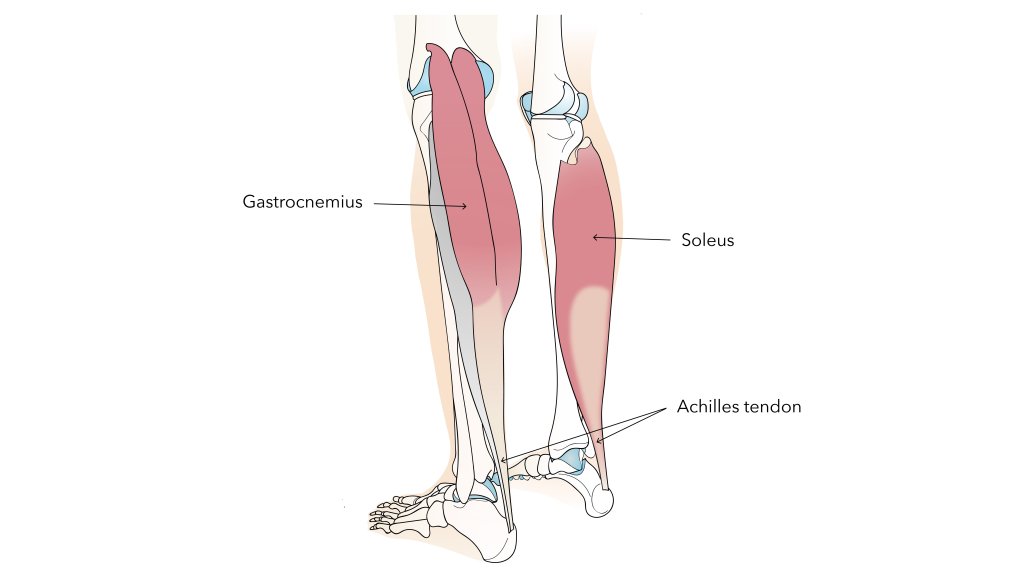
The calf itself consists of two main muscles: The gastrocnemius which looks like a large teardrop on the back of your shin, and the soleus which is a flat muscle that rests behind the gastrocnemius. When you walk, both muscles constrict to pull the heel up and dorsiflex your foot so you can land on your heel first and roll onto the ball of your foot mid-stride. In yoga, the calf muscles lengthen in various folds to keep your heels on the ground. When your knee is straight, the gastrocnemius is the primary mover of plantar flexion in your foot, which enables you to point your toes down. But when the knee is bent, the soleus takes over to accomplish the task. In a mindful walking practice, you can feel the calf muscles on both legs engaging and notice the sensations of the lengthening and constricting with every step.
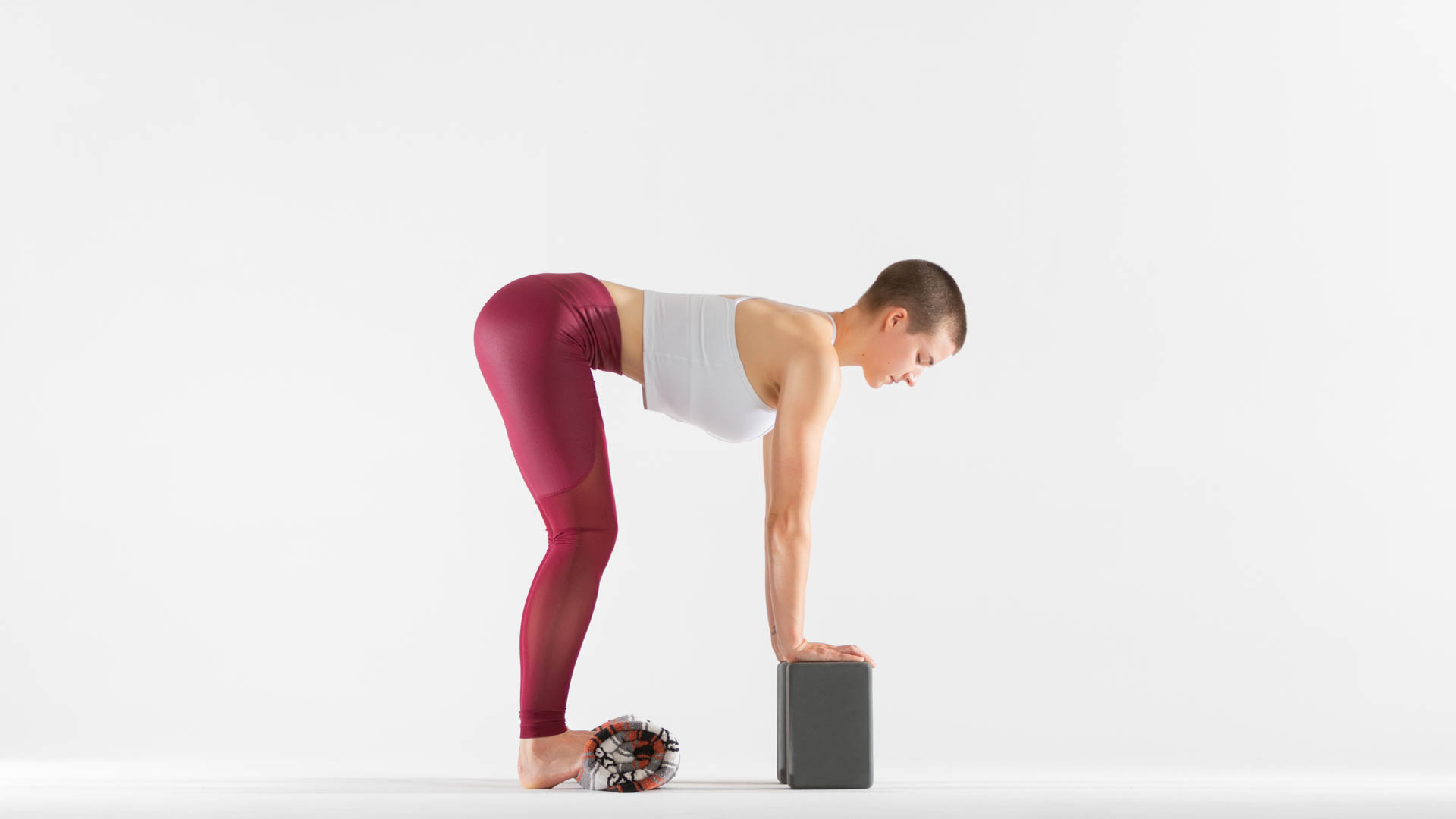
If tight calves are an issue for you, one of the best remedies is to stretch them regularly. The yoga poses below provide the lengthening you need to address that pesky constricted feeling.
Supta padangustasana
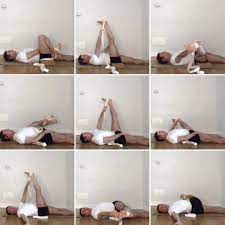
Why this yoga pose helps with tight calves: Similar to Seated Forward Bend, this calf stretch comes from drawing the ball of your foot toward your face while pressing through your heel. By focusing on one leg at a time, you’ll discover more targeted relief. Plus, this pose can be modified by bending the knee of the lowered leg to a 90-degree angle which helps with the scissoring of the legs, bringing the elevated leg closer to your torso.



 Bodhisattva Road Yoga